Gold moves and the quote does not
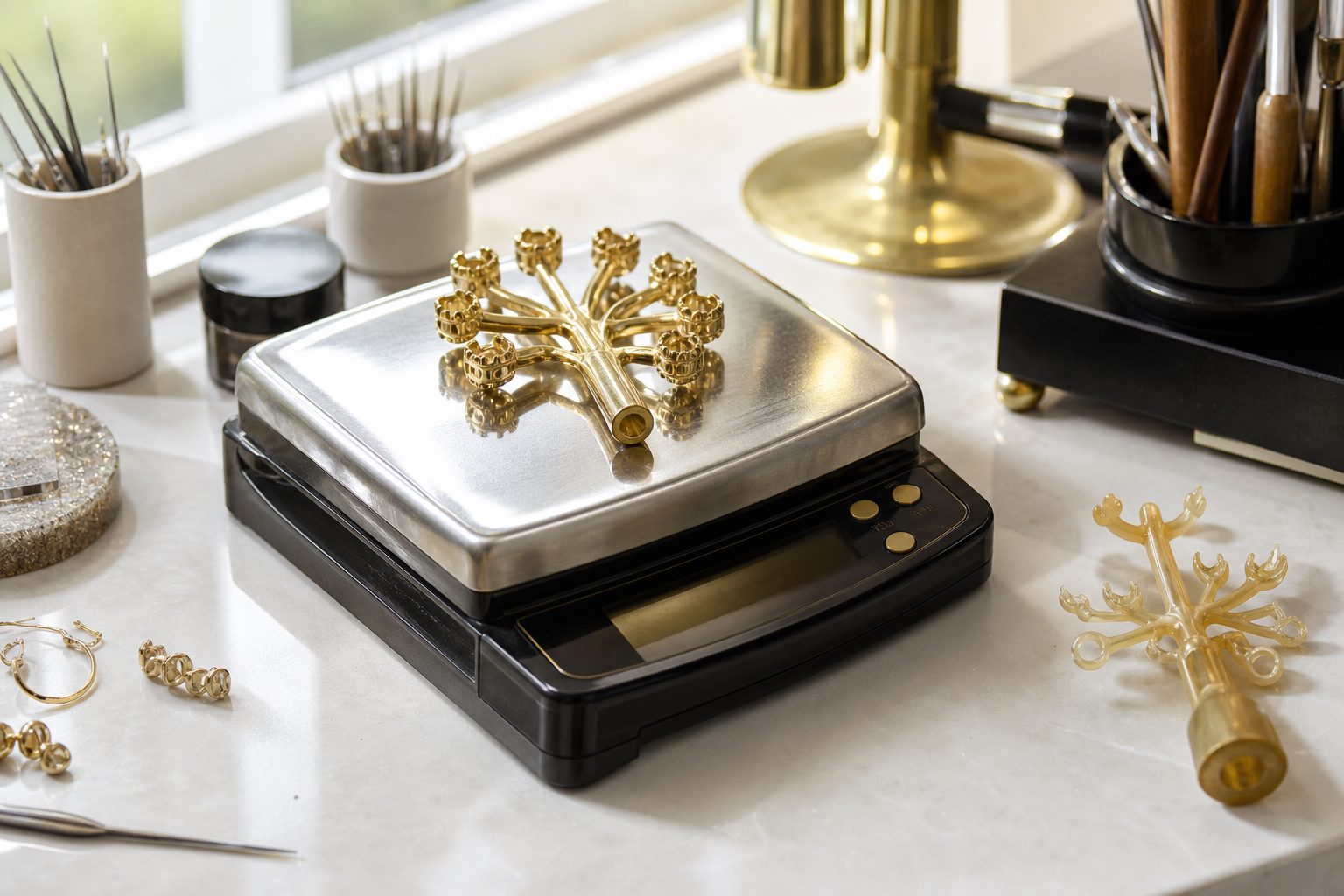
A quote written in March and cast in May is priced at last season's spot. On an 18 karat cuff at 34 grams, a nine percent move is real money you already promised away.
Average loss: $184 per pieceCustom commissions and remounts
BeadInvoice turns a sketch and a client conversation into a priced commission in about four minutes, with every gram, stone and hour written down where the client can read it. The deposit request travels with the quote, so the job funds itself before your torch is lit.

The bench problem
You know the pattern. Gold moved between the quote and the casting. The client asked for a slightly wider band. The setter took two extra hours on an old six prong head. None of it was captured anywhere, and the margin quietly went out the door with the ring.
A quote written in March and cast in May is priced at last season's spot. On an 18 karat cuff at 34 grams, a nine percent move is real money you already promised away.
Average loss: $184 per pieceHand fabrication, a stubborn bezel, a second polish after the client saw it in daylight. Untracked bench time is the single biggest hole in a custom book.
Average loss: 6.2 hours a weekWax cut, stone ordered, and the deposit still sitting in a text thread. Your working capital funds a piece the client has not yet committed to in writing.
Average exposure: $2,800 openShe approved the CAD render in an email and the stone swap by phone. When the finished piece surprises her, there is nothing to point to and you eat the remake.
Average remake: $640 per jobHow it works
Enter the finished weight, or type the wax weight and pick the alloy: the converter applies the density factor for 14 karat yellow, 18 karat rose, palladium white, platinum or sterling, adds your sprue and loss percentage, and prices it against the hourly metal feed.
Center stone, side stones, the client's own diamond out of grandmother's ring. Each carries cost, source, disclosure and its own setting labor, so a bezel set cabochon and eight bead set melee never share a vague "setting" number again.
Fabrication, CAD, casting, assembly, setting, finishing and engraving each take hours at the rate you set for that bench. Save the pattern as a template so the next three stone remount quotes itself from your own history.
The client opens a clean quote, accepts it and pays the deposit percentage you set. The job card unlocks stage by stage: wax approved, stones approved, setting approved, each one time stamped with her name against it.
Built for the bench
Gold, platinum, palladium and silver reprice every hour, and each quote records the spot it was written against. Set a validity window and expired quotes reprice themselves instead of costing you the difference.
Every stone carries origin, treatment, lab grown or mined status and certificate number, and those fields print on the client document. Client supplied stones are tracked from intake through setting with photographs at each handoff.
Run one rate as a solo maker or a separate rate for each bench, setter and CAD station. A running timer on the job card turns real hours into invoice lines, so quoted time and actual time sit side by side after delivery.
Choose a fixed deposit or a percentage per job type, and the request is part of the same document the client accepts. Balance reminders go out on your schedule and the job card shows exactly what is still owed.
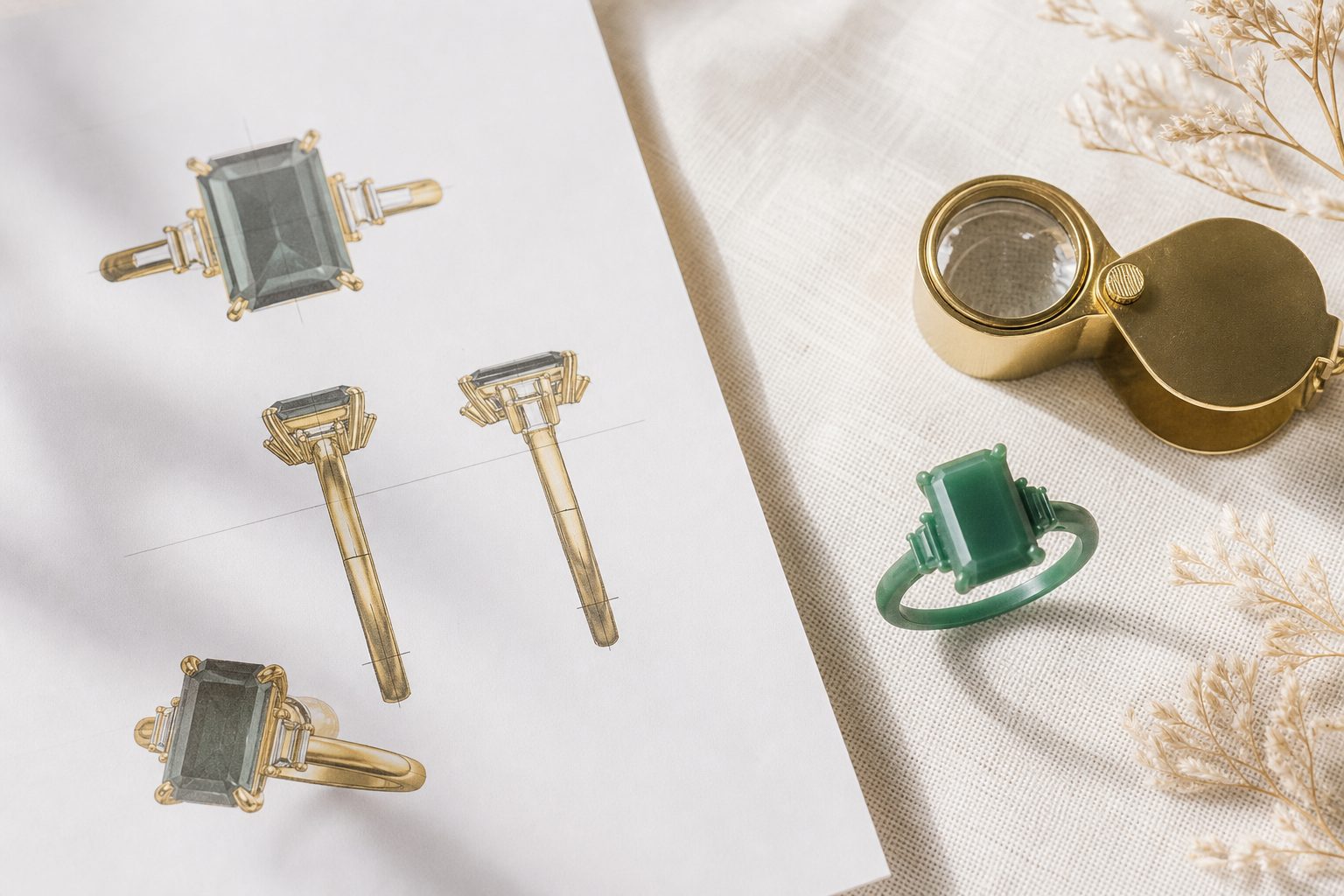
Wax, CAD render, stone selection and final finish each need a signed approval before the job moves on. She sees the photograph, taps accept, and the record holds her name, the date and the exact image she approved.
After delivery, each job shows quoted versus actual on metal, stones and hours, with the recovered margin in dollars. Sort a year of work by profit and you can see which commission types deserve your calendar.
What changes
Recovered by pricing metal at the spot on the day of casting, billing loss and sprue honestly, and putting setting labor on its own line instead of folding it into a round number.
Saved templates for solitaires, three stone remounts, eternity bands and repairs mean you adjust weights and stones rather than starting from an empty page for every enquiry.
Because the request rides inside the quote the client is already reading and accepting, instead of arriving three days later as a separate and slightly awkward message.
Signed stage approvals at wax, stone and finish give both of you the same reference point, so a late change becomes a priced revision rather than an argument you pay for.
From the trade
I used to quote a remount off the top of my head and find out at delivery that the head and eight prongs had eaten four hours. Now the setting labor is a line the client reads before I touch her mother's diamond. My average remount ticket went from $1,180 to $1,455 and nobody has argued once.
Two benches and a CAD station means three different rates, and my old spreadsheet pretended they were all the same. The first month we ran real rates, the shop found $6,300 of labor we had been giving away. The stage approvals ended the Saturday phone calls about what she thought she had picked.
Gold ran up while I had eleven open commissions quoted at the old price. That is the last time. Quotes now expire in fourteen days and reprice themselves against the morning feed, and my clients accept that the way they accept it from a contractor. It reads professional, not fussy.
Plans
Priced for a shop, not for a venture round. Every plan carries the metal feed, the stone ledger, deposits and stage approvals: what changes is how many people work behind the counter and at the bench.
$29 per month
For the maker who is designer, setter and front of house.
$69 per month
For a designer with a setter, a caster and a bench assistant.
$149 per month
For a studio with a sales floor and trade repair work.
Every plan is billed monthly in US dollars and can be cancelled at any time from your account screen. No setup fee, no commission percentage, and your data exports in full whenever you ask for it.
Questions
You build the quote the way you build the piece. Enter the finished metal weight or let the calculator convert from a wax weight, choose the alloy and karat, add each stone with its cost and setting labor, then add bench hours by operation at your own shop rate. Loss, casting fees and finishing are line items you control, so a piece you have never made still prices from real numbers rather than a guess.
Most independent designers are quoting live the same afternoon. You set your shop rate, your metal markup and your stone margin once, then import open jobs from a spreadsheet with a column mapper. Studios with several benches usually spend a second session setting up per bench rates and approval templates. Nothing is locked, so you can change a rate later and it applies to new quotes only.
Your commission records, client contacts and photographs are stored in encrypted databases hosted in the United States, with encryption in transit and at rest. Access is scoped per user, so a bench jeweler on the Studio plan sees jobs and not margins unless you grant it. We do not sell data, we do not train models on your job files, and you can export the whole book to CSV at any time.
Deposits and balances run through Stripe or Square, and payouts land in the account you already use. Paid invoices sync to QuickBooks Online and Xero with a per class mapping, so metal, stones and labor land in the right ledger accounts. There is a live metal price feed for gold, platinum and silver, plus a documented API and Zapier connection for CAD queues, shipping and email tools.
Every plan is billed monthly and you can cancel from the account screen without calling anyone. Billing stops at the end of the current period and your account stays readable for sixty days so you can finish and export the jobs still on the bench. Exports include quotes, approvals, payment history and job photos in open formats. If you come back later, the archive is restored intact.
The opposite happens far more often. A client who sees the metal weight, the stone, the setting labor and the finishing broken out understands what she is paying for and stops comparing your work to a mall case price. The deposit request arrives as part of that same document, so it reads as normal practice rather than an awkward ask. Designers using stage approvals report fewer remakes because the client signed off on the wax before anyone set a stone.
Every kind of job on the board
A custom book is rarely only custom. BeadInvoice carries the same metal, stone and labor logic across the other work that pays the rent, so nothing gets quoted on a sticky note.
Center stone, halo, side stones and a matched band on one job card. Bridal sets keep a shared design record so the wedding band is quoted against the ring that already exists.
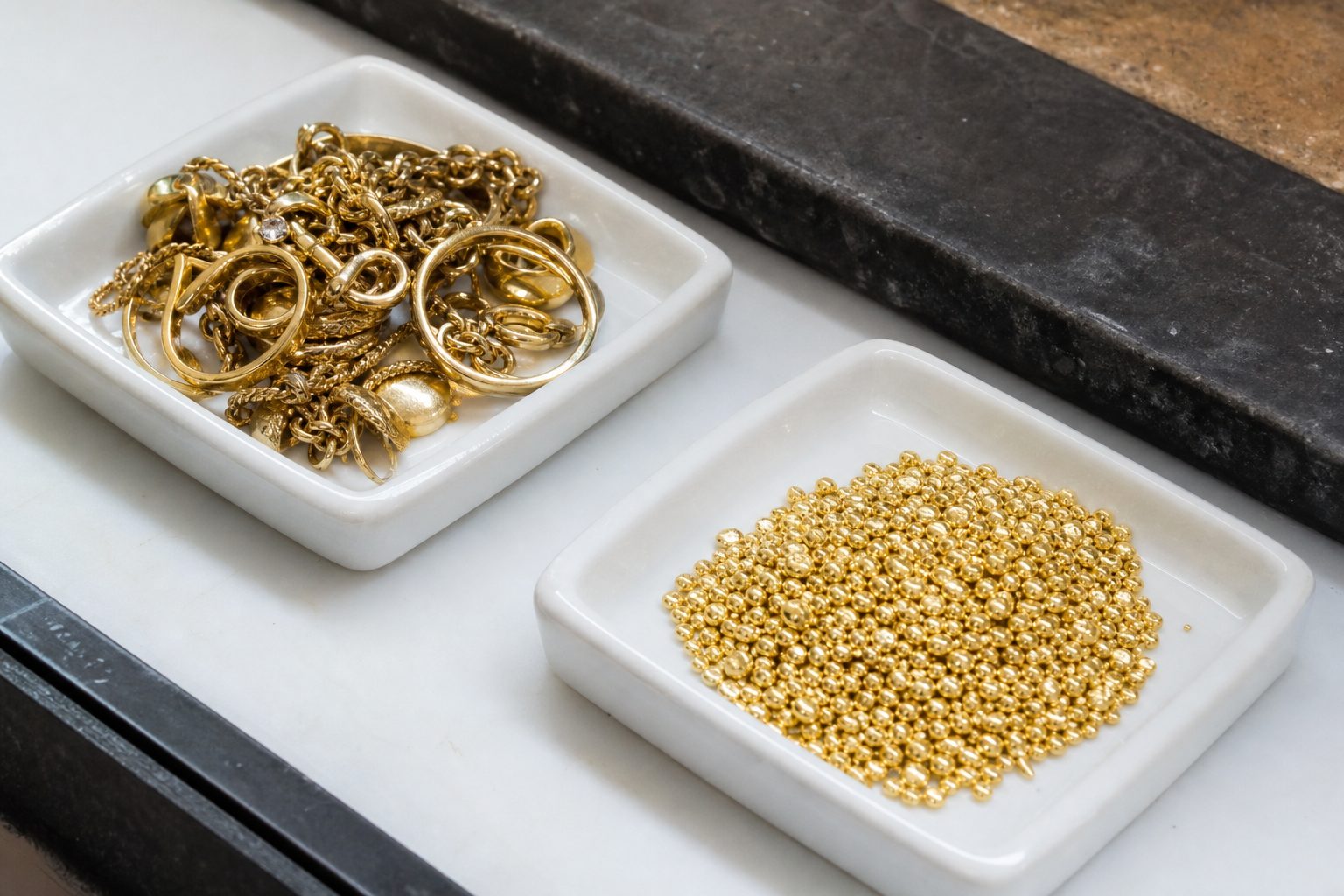
Client stones arrive with intake photographs, weights and a signed receipt. Scrap gold coming in is credited on the same quote at your refiner rate, net of loss.
Sheet, wire and tubing priced by weight from your own stock list, with fabrication hours split from setting hours so the labor story stays readable.
Model fees, print or growth cost, casting house charges and cleanup each hold their own line, and a repeat cast of an existing model reuses the saved cost sheet.
Quick tickets for sizing, retipping, chain solder and rhodium finish, priced from a rate card you maintain, with the same deposit and approval mechanics when the job warrants it.
Accounts on the Studio and Retail plan carry their own pricing tier and terms, so a designer sending you setting work sees her rate and not the retail one.
Inside the job card
Quoted total, deposit received, balance due, metal spot on the day of the quote and on the day of the cast, and the recovered margin once the piece ships. Nothing is hidden behind a report you have to run.
Updated the moment a payment landsWeights, alloys, stone list with disclosures, the operations still to run and who is running them. A setter opens the card and knows the head, the finish and whether the client changed her mind about milgrain.
Printable as a bench ticketEvery approval, every photograph, every revision and the reason for it, time stamped with a name attached. Two years later you can still show exactly what was agreed and when.
Exports as a PDF in one clickShe sees a clean version of the same card: her piece, her stones, what is approved, what is owed and what happens next. No login to remember, just a private link you control.
Readable on a phone in a parking lotSecurity is not an afterthought here: records live in encrypted US hosting, access is scoped per person, and photographs of a client's family diamond are treated with the same care as her contact details. Full detail sits in the privacy policy.
Getting your book across
You tell us your shop rate, the alloys you actually work in, your loss percentage, your stone margin and your deposit rule. That is the whole configuration, and it takes about forty minutes with a coffee.
Import the commissions currently on the bench from a spreadsheet, then save your four or five most common quote shapes as templates. From here, most enquiries are a template plus two edits.
Send a real quote to a real client with the deposit request attached. We stay on hand that week so the first few documents look exactly the way you want them to look on her screen.
Connect QuickBooks Online or Xero, map metal, stones and labor to your ledger accounts, and hand your bookkeeper a set of invoices that reconcile without a single phone call.
Support is by email and scheduled call, answered by people who can read a bench ticket. No queue tickets that route to someone reading a script about our platform.
The Bench Ledger
The Bench Ledger writes up the questions that arrive at the bench: what a moving gold price does to a quote you already sent, what has to appear on a diamond invoice, and how much of your week is actually billable.
practical guide
Metal is the one line on your quote that changes hourly. Here is how to build a quote that survives a spot price swing between the deposit and the casting, without eating the loss yourself.
comparison
Reusing a grandmother's ring feels generous and sells the story, but old metal carries porosity, unknown alloys and liability. A side by side look at cost, risk and finish quality.
mistakes to avoid
Most commission disputes trace back to one skipped signature. A walk through the failure points from CAD render to final polish, and the approval gates that stop each one.
Book a bench walkthrough
Pick a job from the last year that came in under margin. On a thirty minute call we enter it into BeadInvoice line by line, metal, stones, hours, and you see the number it should have carried. Most designers find between $200 and $600 in the first piece we open.
Demos are run by people who have priced commissions for a living, not by a sales script. If BeadInvoice is not right for how your shop works, we will tell you on the call.
We reply within one business day, and we never pass your details to anyone. Quotes, stone lists and remount questions are just as welcome by email at jimenezjulien42@gmail.com.